
FOREIGNERS
Those other spanish artist
May 24 – September 15, 2002
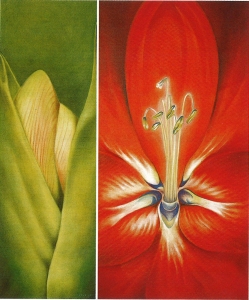
From Romanticism on, Spain has attracted numerous foreign artists who, either definitively or temporarily, have resided in this country. During certain periods in our history their influence has been decisive for the evolution of Spanish art. The first two decades of the twentieth century saw the introduction of avant-garde literary and artistic movements, and during the Franco era they provided one of the few means of contact with the outside world. The exhibition, Foreigners, Those Other Spaniards, brings together the work of 34 artists from 17 different countries who reside or have resided in Spain from the 1950s to the present. We could, therefore, consider it a sampling of international art done inside our borders. The title is deliberately provocative, if only because it brings to light the fact that this group of creators is an exemplary phenomenon of social integration, insofar as they neither feel themselves to be, nor are they seen as foreigners. The exhibition attempts to analyze the relations between Spanish art and international art through the presence of foreign artists in our country. We can draw several conclusions from this, such as the fact that the modernizing initiatives of Spanish art of the last half of the twentieth century have, almost without exception, counted on a significant presence of foreigners. Moreover, they played an extremely important part in the consolidation of abstract art and, until the middle of the 80s, a relevant role in Conceptual Art and Action Painting. It was precisely at this time that their influence became less evident in the totality of Spanish art which, in turn, has gradually become more international in its outlook. Within an astonishngly broad group of artists, we have attempted to show a representative selection in regard to their origins and their respective artistic languages. Belonging to different generaions and three continents, men and women, painters, sculptors and one photographer make up one of the possible maps of present-day art.
The aforementioned contribution to Informalist Abstraction is represented in the 50s by artists such as the Germans Will Faber and Erwin Bechtold. In the following decade, this tendency includes the Argentine Alberto Greco, who introduced Action Painting to Spain, in which the German Wolf Vostell, and the Italian Walter Marchetti played an important part. Figuration is present in its two opposite poles: its Action Painting roots with theDutch painter Lucebert or the Chilean Gastón Orellana, and the almost Hyper-Realist Chilean Claudio Bravo or the German Mati Klarwein. Geometric art is also represented significantly by artists who arrived throughout the 60s and 70s such as the Cuban Waldo Balart, the American Rinaldo Paluzzi, and the Argentinian Adolfo Estrada. During the 70s this tendency was exemplified by the painter from Japan Mitsuo Miura, and the Austrians Eva Lootz and Adolfo Schlosser, whose work touched off a new impulse in the renovation of sculpture. The same is true of the Spaniard of British origin Tom Carr. In the last quarter of the twentieth century the number of foreign artists has increased: the German radical abstract artist Alberto Oehlen, the Uruguayan Yamandú Canosa, whose work deals mainly with the theme of immigration, and the Czech painter Dokoupil, an example of the new figurative trends. Also during this period a more traditional type of painting is represented by the British artist Simon Edmonson, and the Islandic painter Nicolai, or the recovery of a sensibility typical of the period between the two world wars in the work of the Dutch painter Angie Kaak. Also in recent years there have been a number of creators who reside in several countries or cities, such as the Irishman Sean Scully, or the Czech Jane Sterbak. Scully developed a particular type of expressive geometric painting while Sterbak deals with the body in various conceptual terms, an interest she shares with the Peruvian Diego Figari. From the Philippines came Manuel Ocampo, who utilizes Baroque rhetoric in his critical painting. The youngest artists in the exhibition are the Argentinians Laura Lío and Alejandro Corujeira. Their work is located in a kind of lyrical abstraction and in a sculpture of Constructivist origins carried to the point of levity and silence which has a delicate echo, although in a very different vein, in the exceptional collages of the Uruguayan Washington Barcala. On the edge of all these tendencies are unusual works, such as the poetic photographs of the Argentine Humberto Rivas and the surrealist canvases of the Cuban Jorge Camacho. Also defying classification is the work of the duo Yannik Vu and Ben Yakober, with their peculiar symbolic sculpture. Lastly, we must mention two extreme cases: the Philippine Fernando Zóbel, the founder of the Museo Abstracto de Cuenca, a thoroughly “Spanish” artist, and the Frenchman Yves Klein, whose stay in Madrid was significant for his own personal evolution even though he did not leave his mark on the art of our country